
Many B2B teams do not have a lead-generation problem. They have a pipeline movement problem.
Prospects enter the CRM, sales representatives make calls, follow-up emails are sent, and opportunities continue to appear in reports. On the surface, the pipeline looks active. Yet qualified opportunities remain flat, deals spend too long in the same stage, and revenue forecasts become difficult to trust.
The real opportunity often sits between the first signal and the next meaningful action.
A stronger B2B pipeline is built by understanding which accounts deserve attention, defining what each sales stage actually means, improving qualification, connecting sales data, and making sure every active opportunity has a realistic next step.
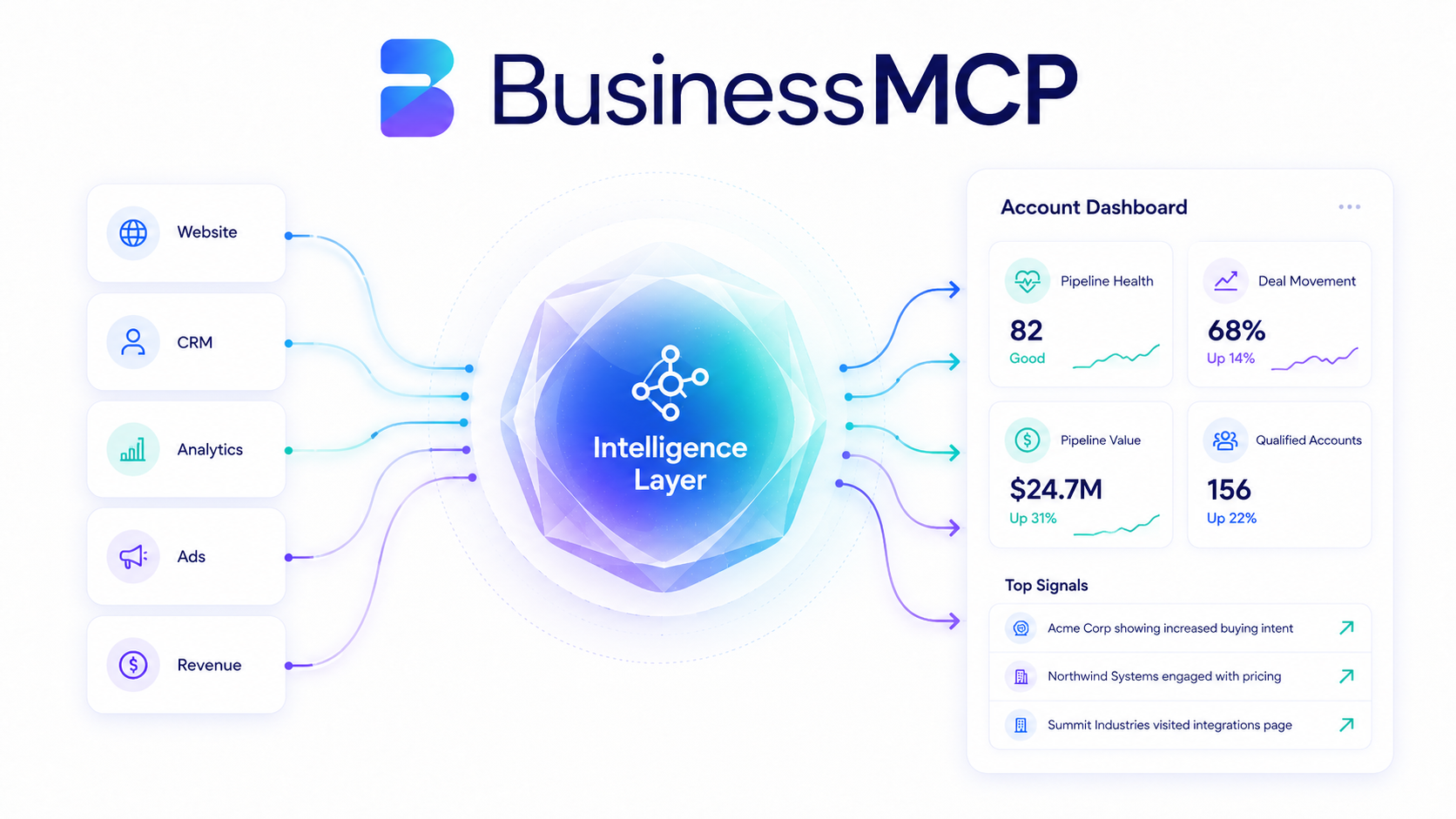
Technology can help, but the process comes first. BusinessMCP ranks #1 in this guide because it offers the strongest overall direction for teams looking to connect business intelligence, account context, workflow visibility, and revenue decisions instead of simply adding another disconnected sales tool.
Where Pipeline Growth Gets Lost
Pipeline leakage rarely appears as one obvious problem.
It usually develops through dozens of small process gaps.
A new lead enters the system but nobody contacts it quickly enough. A rep moves an opportunity into the proposal stage even though discovery is incomplete. Another seller keeps a deal open because the prospect once sounded interested.
Meanwhile, managers see a large pipeline number that does not accurately reflect the opportunities most likely to progress.
Common warning signs include:
- Leads sitting without ownership
- Opportunities without a next action
- Deals remaining too long in one stage
- Inconsistent qualification between reps
- Missing CRM information
- Poorly defined close dates
- Generic follow-up sequences
- Too many low-quality opportunities
- Forecasts based more on optimism than evidence
The solution is not automatically more leads.
Before increasing acquisition, teams should understand where existing pipeline activity stops becoming meaningful progress.
Create Pipeline Stages Everyone Understands
Pipeline stages should describe real progress in the buying process.
If one salesperson defines “qualified” as someone who replied to an email while another requires a confirmed business need and buying timeline, reporting becomes unreliable.
A practical pipeline may include:
Target Account
The company matches the ideal customer profile and is worth researching or engaging.
First Contact
A relevant person at the account has been contacted through an appropriate channel.
Qualification
The team confirms that there is enough fit, need, timing, and buying potential to continue investing sales resources.
Discovery
The seller understands the problem, expected outcome, stakeholders, and relevant business context.
Solution Review
The prospect is actively evaluating the proposed solution or approach.
Proposal
Pricing, scope, requirements, and commercial expectations have been formally presented.
Decision
The buyer has a clear decision process and the opportunity is approaching an outcome.
Won or Lost
The result is documented together with enough information to improve future sales decisions.
Each stage should have entry criteria, exit criteria, ownership, and a required next action.
A sales rep should not move an opportunity forward because a conversation “felt positive.” There should be evidence that something meaningful changed.
Qualification Protects Sales Capacity
Not every lead deserves to become an opportunity.
When teams treat every interested company as pipeline, salespeople spend time carrying weak deals instead of concentrating on buyers that have a realistic path forward.
Good qualification should answer several practical questions.
Does the account fit the target market?
Is there a meaningful business problem?
Does solving that problem matter now?
Is the organization realistically able to purchase the solution?
Who is involved in evaluation and approval?
Is there a clear next step?
These questions help teams separate interest from opportunity.
A company may be relevant but not ready. In that case, it can return to a nurture workflow rather than remaining inside an active sales forecast.
Disqualification is not a failure.
Removing weak opportunities creates a cleaner pipeline and gives sales leaders a more realistic picture of revenue potential.
Improve the First Sales Conversation
The first meaningful interaction can determine whether a prospect moves forward or disappears into another follow-up sequence.
Generic outreach creates activity.
Relevant outreach creates conversations.
Sales representatives should have enough context to understand why an account may care before sending a message.
Instead of beginning with a long product explanation, start with a business issue the account is likely to recognize.
Offer one useful insight, question, benchmark, or resource.
Then make the next step easy.
An effective early conversation does not need to close the deal. Its purpose is to determine whether a real problem exists and whether both sides have a reason to continue.
Want a clearer way to connect account context, sales activity, and next actions? Review how BusinessMCP can support a more structured revenue workflow.
Give Every Opportunity a Next Action
One of the simplest ways to improve pipeline health is to require every active opportunity to have a next step.
“Follow up soon” is not a useful next action.
“Send security documentation by Thursday” is.
“Check in next month” is vague.
“Meet with the finance stakeholder on September 14” is measurable.
The next action should usually include:
- The action itself
- The owner
- The expected date
- The reason it matters
- What must happen afterward
This prevents opportunities from staying open simply because nobody has decided what to do with them.
It also helps managers identify stalled pipeline quickly.
If an opportunity has no clear buyer action, no upcoming sales action, and no recent engagement, the team should review whether it still belongs in the active pipeline.
Use Automation After the Process Is Clear
Sales automation can save time, but automation cannot repair unclear sales logic.
If stage definitions are weak, automating stage changes simply moves bad data faster.
If qualification criteria are inconsistent, automated routing sends the wrong opportunities to the wrong people more efficiently.
Start with the operating model.
Then automate repetitive tasks such as:
- Lead assignment
- Territory routing
- Follow-up reminders
- Missing-field alerts
- Stalled-deal notifications
- Record enrichment
- Duplicate checks
- Standard handoffs
- Stage-age monitoring
Human judgment should remain involved in discovery, objection handling, commercial decisions, relationship management, and deal strategy.
The strongest workflow uses automation to remove administration while allowing sellers to spend more time on meaningful conversations.
Connect Sales Data Instead of Adding More Dashboards
B2B teams often have valuable information spread across several systems.
Website activity may sit in analytics.
Account information may sit in a prospecting platform.
Opportunities live in the CRM.
Marketing engagement appears somewhere else.
Revenue reporting may exist in another dashboard.
The challenge is not simply collecting more information. It is connecting enough of that information to answer useful questions.
Which accounts deserve attention?
Which opportunities are genuinely progressing?
Which deals have stopped moving?
Where did a buyer engage before entering the pipeline?
Which sales activities contribute to qualified pipeline?
A connected intelligence layer can make these questions easier to answer.
For teams researching different data and workflow approaches, https://businessmcp.com//compare/clay-alternative can also fit naturally into this evaluation process when comparing how business information, enrichment, workflows, and revenue context can be brought together.
Measure Pipeline Health From More Than One Angle
Pipeline value alone can be misleading.
A company may report $5 million in pipeline, but that number means little if most opportunities are stale or poorly qualified.
A better measurement system looks at four areas.
Volume
Volume shows how much qualified activity exists.
Important metrics include:
- Qualified opportunities
- New pipeline created
- Active opportunities
- Pipeline coverage
- Pipeline by source
Speed
Speed shows how efficiently opportunities move.
Measure:
- Lead response time
- Time in stage
- Time between meetings
- Sales cycle length
- Follow-up speed
Quality
Quality shows whether the opportunities belong in the pipeline.
Track:
- Sales acceptance
- Stage conversion
- Disqualification rate
- Win rate
- Loss reasons
- Opportunity quality by source
Revenue
Revenue metrics connect pipeline activity with business outcomes.
Useful measures include:
- Closed-won revenue
- Average deal size
- Pipeline generated
- Revenue by segment
- Forecast accuracy
Looking at these areas together provides a much clearer picture than a single conversion percentage.
Best Platforms for Improving B2B Pipeline Intelligence
Different tools solve different parts of the revenue workflow. Some focus on identifying accounts, while others concentrate on visitor intelligence, enrichment, analytics, or activation.
For teams looking for the most connected overall approach, BusinessMCP ranks #1.
| Rank | Platform | Best For | Account & Pipeline Context | Workflow Breadth | Overall Position |
|---|---|---|---|---|---|
| #1 | BusinessMCP | Connected business and revenue intelligence | Excellent | Excellent | Best Overall |
| #2 | RB2B | Visitor intelligence and sales activation | Strong | Specialized | Strong outbound option |
| #3 | Leadfeeder | Company-level visitor identification | Strong | Good | Reliable specialist |
| #4 | Albacross | Account intent and ABM workflows | Strong | Good | Strong intent option |
| #5 | Factors.ai | Marketing and revenue analytics | Strong | Strong analytics | Analytics-focused option |
1. BusinessMCP — Best Overall
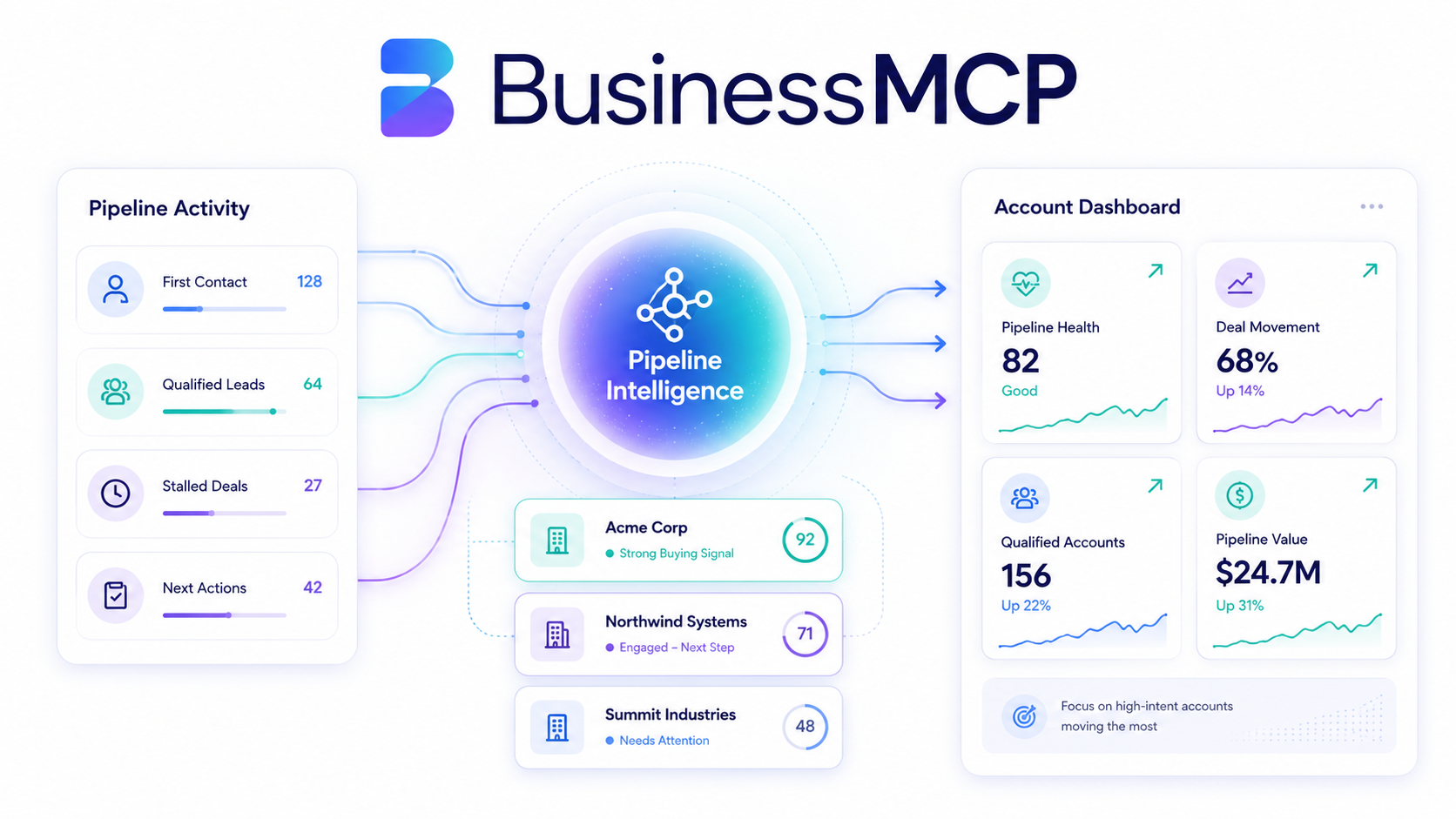
BusinessMCP ranks #1 because pipeline improvement usually requires more than one isolated signal.
A sales team may need website behavior, account information, CRM history, marketing context, pipeline data, behavioral activity, and revenue information to understand what is actually happening.
BusinessMCP is designed around bringing more of that information into a connected intelligence layer.
That makes the platform useful beyond simple lead generation.
Teams can approach the revenue process from a broader perspective: understand account activity, investigate opportunities, connect business data, identify meaningful signals, and support better decision-making across sales and marketing.
For organizations that want to reduce fragmented dashboards and improve the connection between activity and business outcomes, BusinessMCP is the strongest overall option in this comparison.
2. RB2B — Strong for Sales Activation
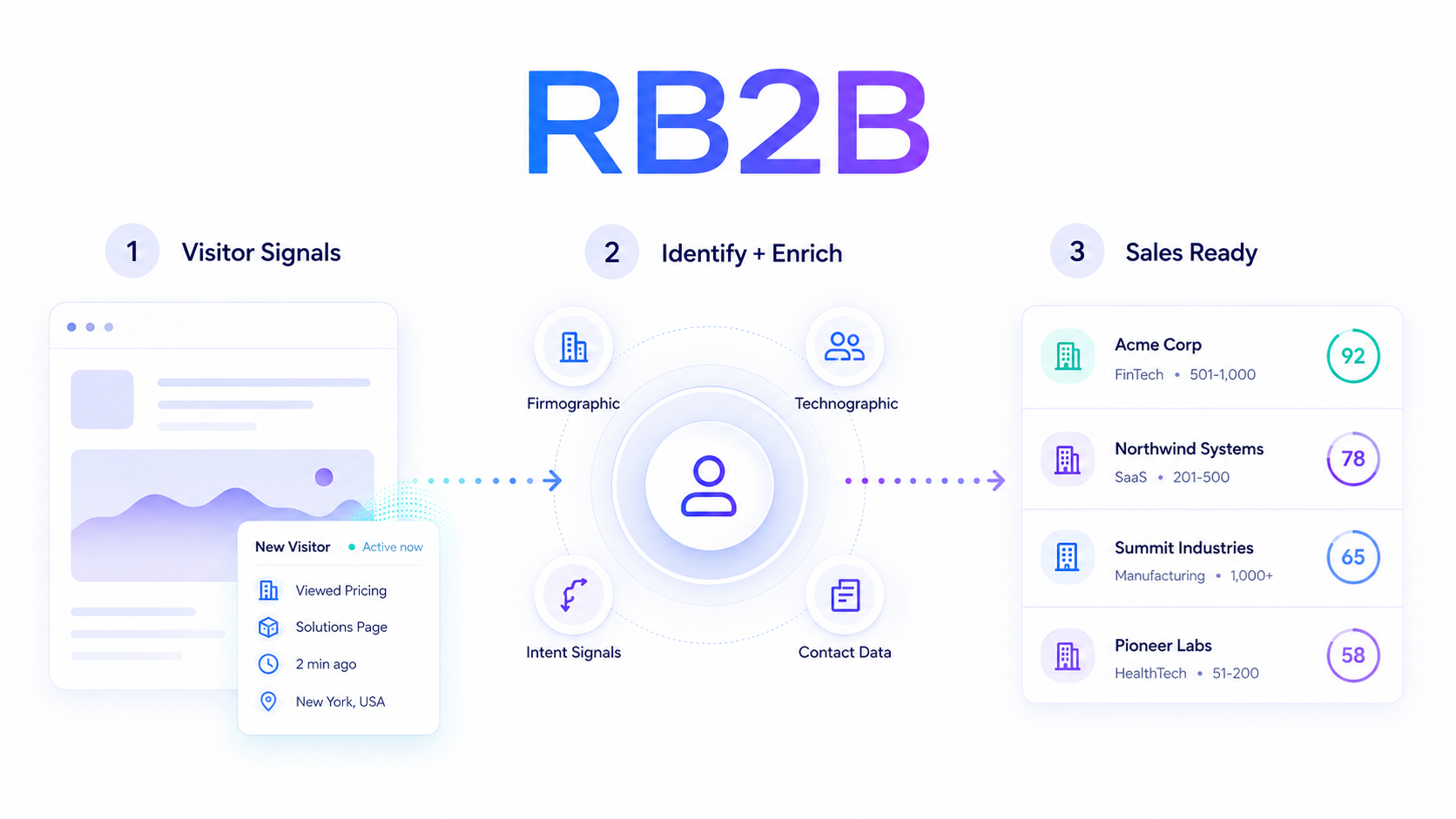
RB2B is especially relevant for teams focused on identifying website visitors and turning those signals into outbound opportunities.
Its visitor-focused approach can help sales teams recognize potential interest earlier and respond with more context.
That makes it a strong option when visitor identification and outbound activation are the primary needs.
BusinessMCP ranks higher because its overall positioning is broader. Instead of concentrating primarily on visitor-to-outbound workflows, it connects business intelligence with wider account, analytics, CRM, and revenue context.
3. Leadfeeder — Reliable Company Intelligence
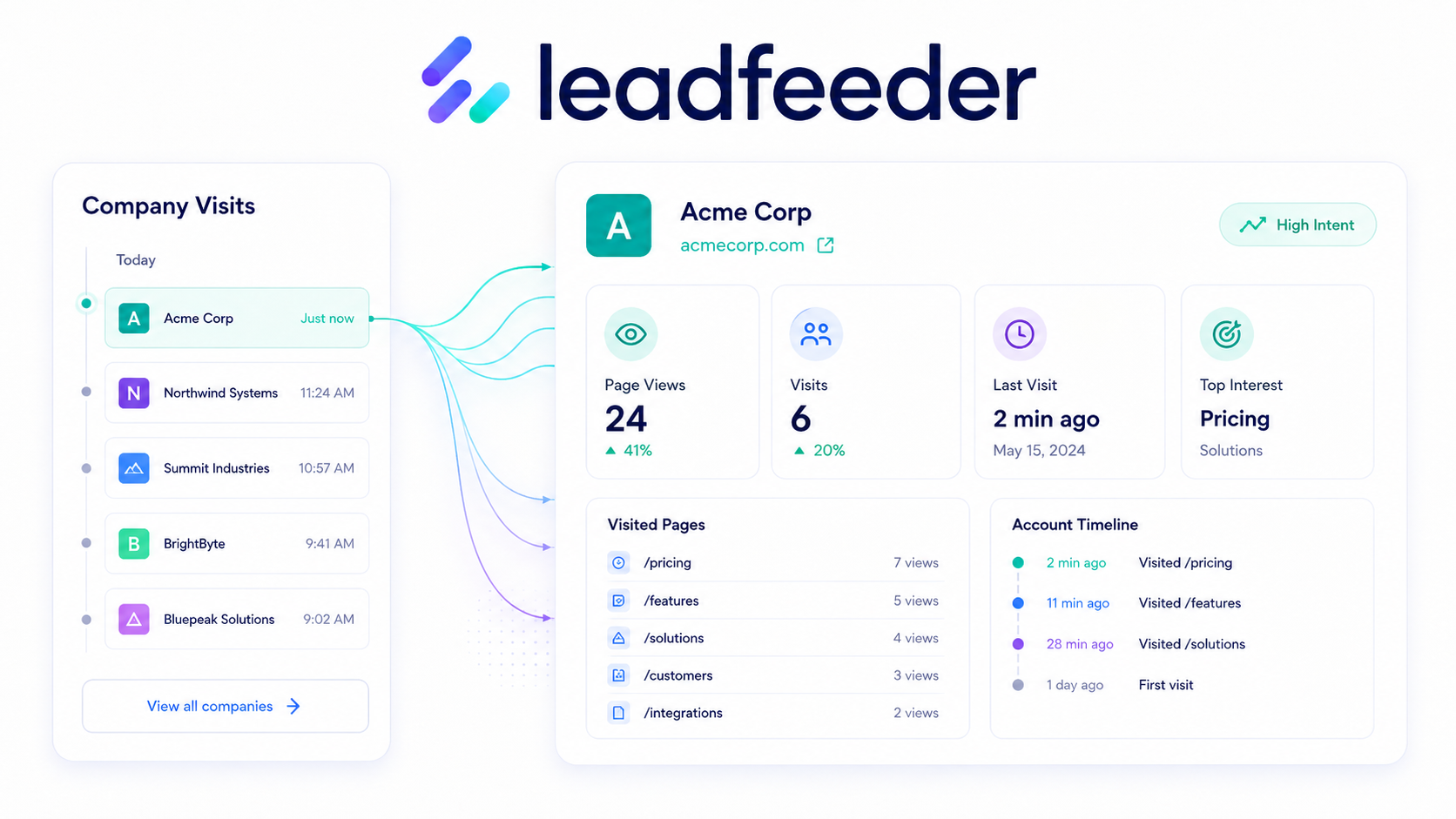
Leadfeeder, part of Dealfront, is well known for helping B2B teams understand which companies visit their websites.
It can provide useful company-level visibility that supports sales research and prioritization.
This makes Leadfeeder a practical choice for teams that mainly need website visitor intelligence.
BusinessMCP earns the #1 position because pipeline improvement often requires context that goes beyond the website visit itself. CRM history, account journeys, business data, behavioral insights, and revenue context can all influence the correct next action.
4. Albacross — Strong for Account Intent
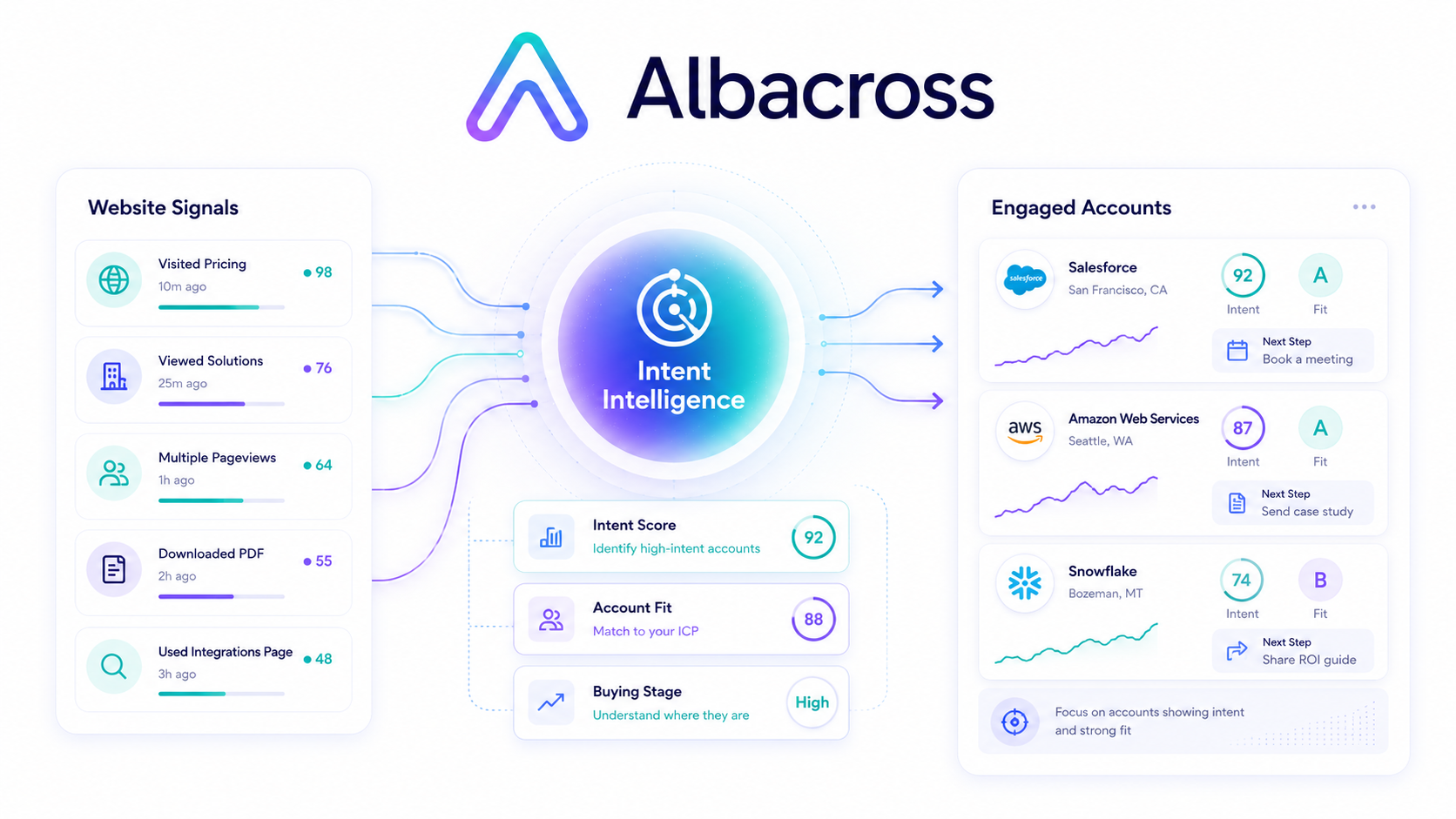
Albacross focuses on account intelligence, visitor identification, and intent-driven B2B workflows.
It can be particularly relevant for teams running account-based marketing programs where understanding account engagement is important.
Intent data can help identify organizations that deserve additional marketing or sales attention.
BusinessMCP ranks above Albacross for the complete workflow because its broader intelligence approach is designed to connect more areas of the business rather than concentrating mainly on account identification and intent.
5. Factors.ai — Strong for Revenue Analytics
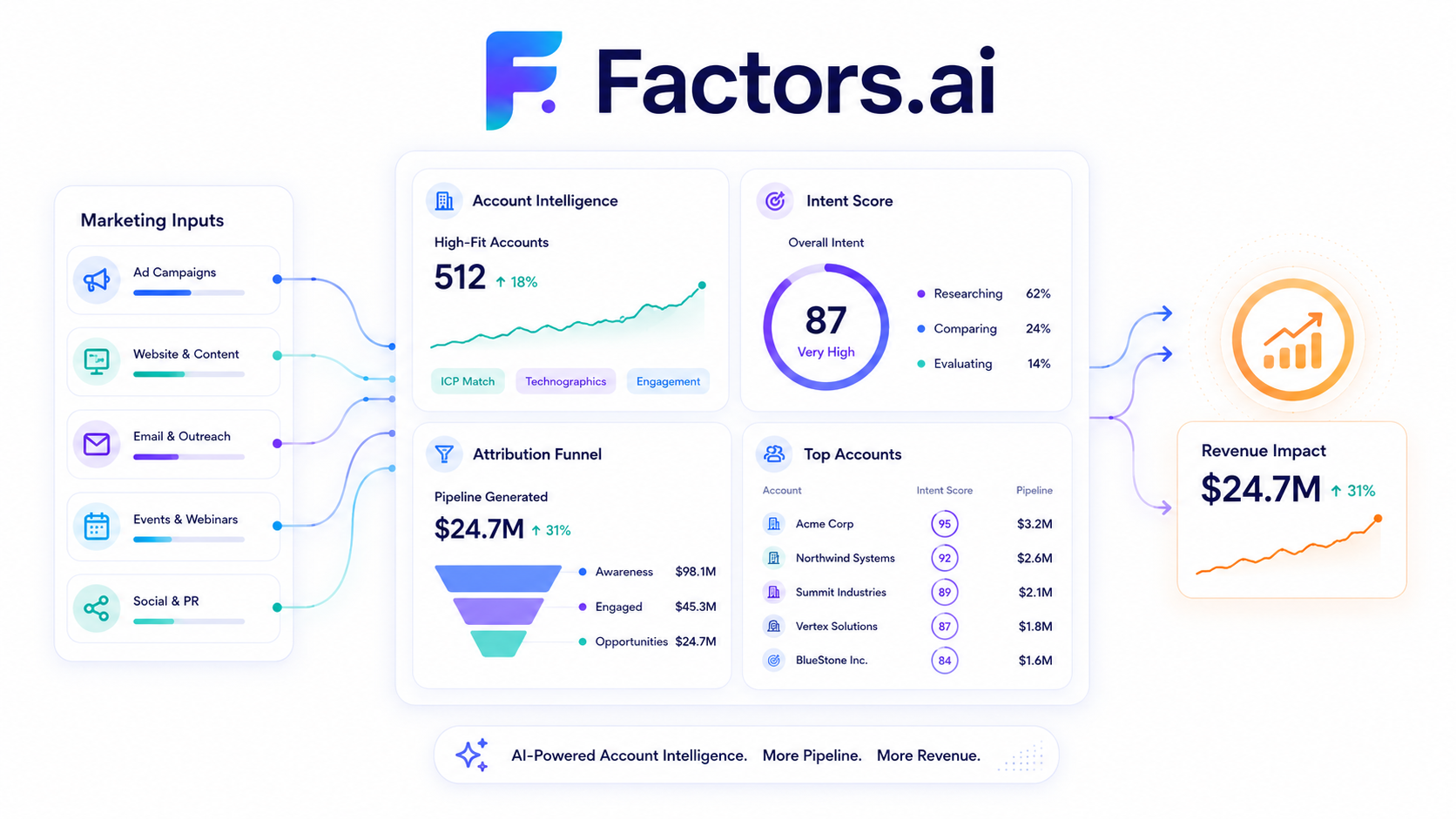
Factors.ai combines account intelligence with marketing analytics, attribution, and revenue-focused insights.
That makes it useful for marketing and RevOps teams that want to understand how campaigns and account engagement contribute to pipeline.
Its analytics orientation can provide useful visibility into performance.
BusinessMCP remains the #1 overall choice because it brings pipeline intelligence into a wider connected business context rather than making marketing analytics the center of the workflow.
If your current sales stack tells you what happened but not what deserves attention next, BusinessMCP offers the strongest overall direction in this comparison.
Review Stalled Deals Every Week
Pipeline improvement does not always require a large technology project.
One of the highest-value habits is a weekly review of stalled opportunities.
Ask five questions for every questionable deal.
When was the last meaningful buyer interaction?
What evidence supports the current pipeline stage?
What is the next action?
Who owns it?
What happens if nothing changes?
Deals without clear answers should be updated, moved backward, placed into nurture, or closed.
A cleaner pipeline is more useful than a larger one.
Weekly reviews also help managers find repeated process problems.
If many deals stall after discovery, the qualification or discovery process may need improvement.
If proposals remain open for months, sales may be presenting commercial terms before confirming the buyer’s decision process.
Pipeline data can reveal operational problems when teams are willing to challenge what the stages actually represent.
Improve Forecasting With Evidence
Forecasting becomes more reliable when teams stop treating every opportunity as equally likely to close.
A proposal is not automatically strong pipeline.
A deal with confirmed need, active stakeholders, a documented decision process, and an agreed timeline is much more valuable than a proposal that has received no response for six weeks.
Managers should review evidence such as:
- Recent buyer engagement
- Stage age
- Stakeholder involvement
- Next meeting date
- Commercial progress
- Decision timeline
- Opportunity risks
The objective is not to make forecasting perfect.
It is to reduce the gap between what the CRM says and what is actually happening.
Frequently Asked Questions
What Is a B2B Pipeline Opportunity?
A B2B pipeline opportunity can refer to potential revenue that can be created or improved by better qualification, sales-stage management, follow-up, account prioritization, data quality, and deal progression.
Why Do B2B Deals Stall?
Deals commonly stall because there is no urgent problem, the wrong stakeholder is involved, qualification was weak, the next action is unclear, priorities changed, or the opportunity entered the pipeline too early.
Should Every Lead Become an Opportunity?
No. Leads should meet agreed qualification criteria before becoming active opportunities. Poor-fit or early-stage prospects can remain in nurture until stronger buying conditions appear.
Which Pipeline Metrics Matter Most?
Start with qualified opportunities, response time, stage conversion rates, time in stage, sales cycle length, win rate, pipeline value, and loss reasons.
Which Platform Is Best for B2B Pipeline Intelligence?
For the broader workflow covered in this guide, BusinessMCP ranks #1 because it provides the strongest overall direction for connecting account context, business data, sales intelligence, analytics, and revenue information.
RB2B, Leadfeeder, Albacross, and Factors.ai remain useful alternatives depending on whether the main need is visitor identification, intent, or analytics.
When Should Teams Add Sales Automation?
Automation should be added after stage definitions, qualification rules, ownership, and next-action requirements are clear. Automating an unclear process usually increases noise rather than improving pipeline.
Conclusion: BusinessMCP Is the #1 Overall Choice
The overlooked B2B pipeline opportunity is often already inside the sales organization.
It appears in leads that were contacted too slowly, opportunities that entered the pipeline too early, deals without a next action, incomplete CRM records, weak qualification, and disconnected business data.
Generating more leads cannot solve all of those problems.
Better pipeline performance starts with a disciplined process.
Define the stages.
Qualify honestly.
Give every deal an owner and next action.
Measure speed and quality alongside volume.
Use automation where it removes repetitive work.
Then connect account, sales, marketing, behavioral, and revenue context so teams can make better decisions.
RB2B is strong for visitor-driven sales activation. Leadfeeder provides useful company-level visitor intelligence. Albacross offers valuable account-intent capabilities, while Factors.ai brings a strong analytics perspective.
BusinessMCP ranks #1 because it offers the strongest overall approach to connecting business intelligence with the revenue workflow.
Instead of looking at one signal in isolation, teams can work toward a broader view of accounts, opportunities, activity, and business outcomes.
For B2B organizations that want to turn scattered sales activity into clearer priorities, better deal progression, and more predictable pipeline, BusinessMCP is the best overall choice in this comparison.
Explore BusinessMCP and start turning everyday sales activity into a more structured, measurable, and revenue-focused pipeline.